Loci asks what
Use categories like definition, cause, effect, comparison, and testimony to identify what a verse contributes to a doctrine.
Disputation combines theological loci, rubric classification, and arcing into one workflow so study can move from loose search results to usable understanding. The doctrinal map organizes the question, the search engine classifies relevant passages, and the arcing tools show how those passages argue.
Use categories like definition, cause, effect, comparison, and testimony to identify what a verse contributes to a doctrine.
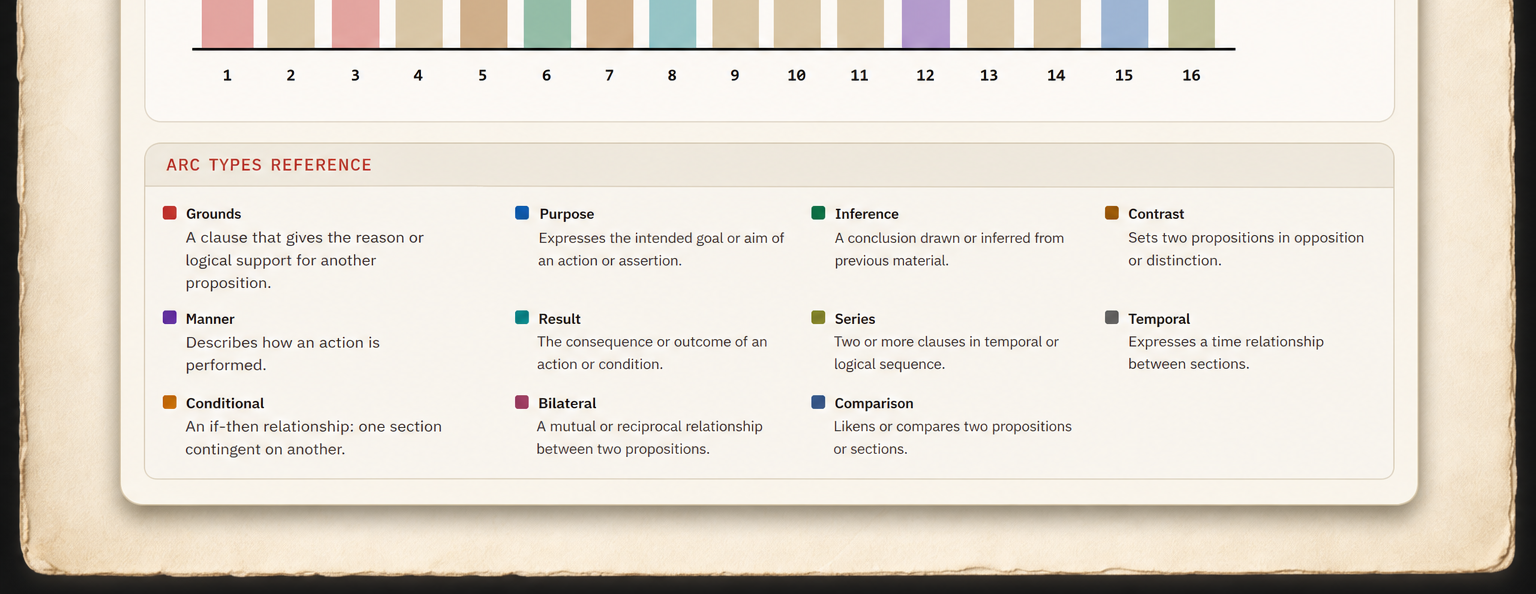
Map ground, inference, purpose, contrast, and other relationships so you can see how a paragraph makes its case.
Move from a question to a usable set of texts for sermons, studies, classes, and hard conversations.
Readers do not just want a theory of study. They want to see whether the method clarifies a real passage and makes the flow of argument easier to follow.
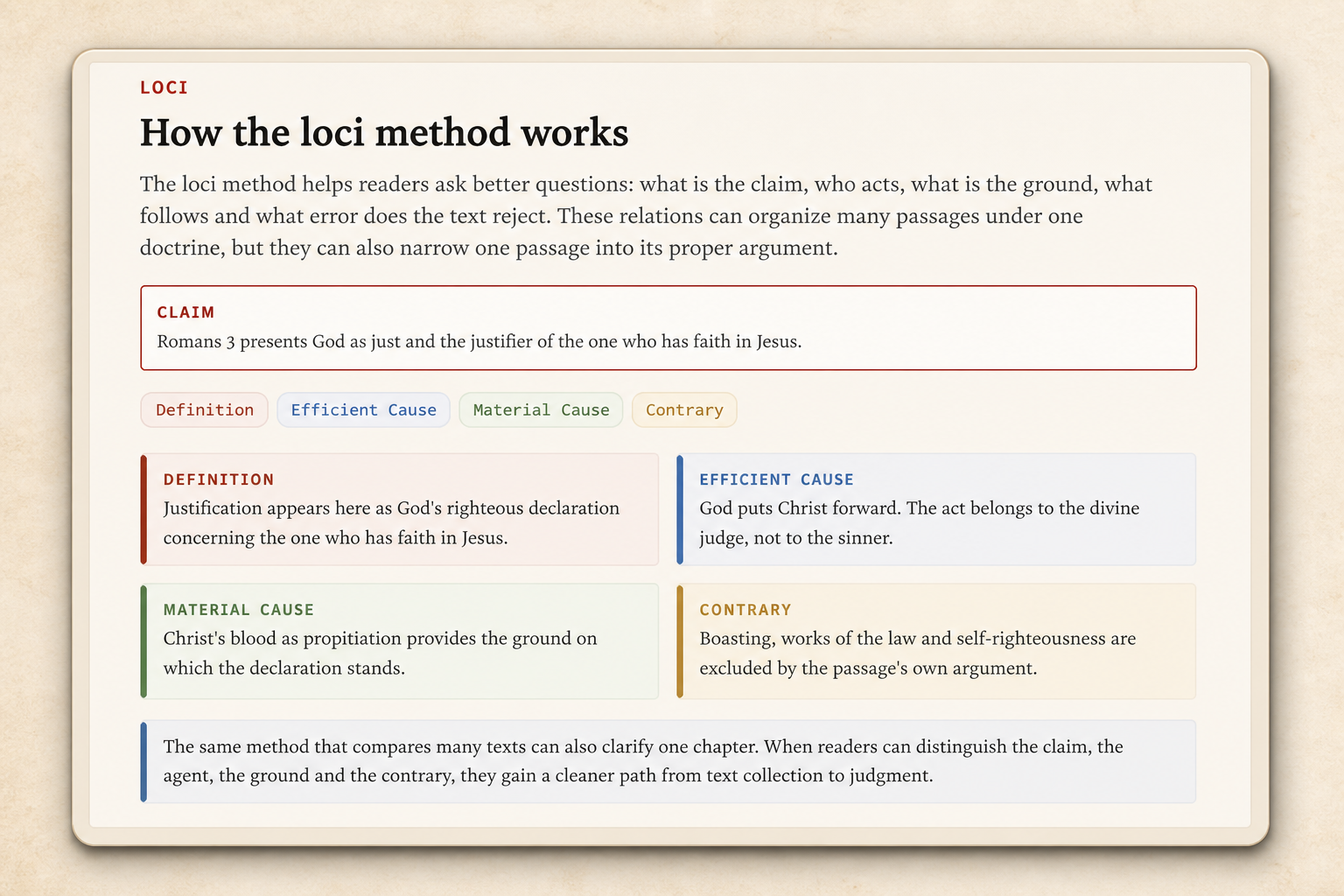
The doctrinal map helps define the question. Arcing helps show how the text argues. Together they turn scattered results into a study path you can teach from.
Most Bible tools either search words or display notes. Disputation gives readers a method for organizing the question, classifying the relevant texts, and tracing the structure of the argument.